Risk Mitigation Never Ends
Estimated reading time: 4 minutes, 15 seconds

(Image Source: Nattapat/stock.adobe.com; generated with AI)
By Caitlin Hartman for Mouser Electronics
Published October 6, 2025
Risk has become a routine part of life for procurement professionals in today’s electronics industry. What does risk really mean for procurement, though? The challenge goes beyond navigating inventory shortages; it involves managing global trade’s shifting dynamics, staying ahead of paid tech evolution, and nurturing supplier relationships amid market volatility. This blog discusses how procurement teams can stay ahead of risks and turn potential obstacles into strategic advantages.
Shortages: More Than Empty Shelves
Shortages have shifted from being exceptions to becoming the norm. From semiconductor bottlenecks to raw material delays, procurement teams are constantly adjusting. However, causes go deeper than demand. A single disruption in one region can ripple across the globe, affecting lead times, pricing, and availability.[1]
Tariffs and special economic areas like free-trade zones (FTZs, also known as Foreign-Trade Zones in the US) can complicate sourcing strategies, especially when dealing with international suppliers. When parts are scarce, the temptation to turn to unauthorized sources grows. Tariffs can suddenly make a previously cost-effective component too expensive to source, and FTZs offer potential savings, but only if you understand how to navigate them.
When parts are scarce, unauthorized sellers often step in with tempting offers. These come with serious risks, however, including counterfeit components, lack of traceability, and potential compliance violations. In industries where safety and performance are non-negotiable, that is a gamble no buyer can afford.
Buyers must ensure that every component comes from a trusted, authorized source. Investing in a distributor that offers real-time traceability, order accuracy, and a global network with authorized suppliers is essential to upholding operational supply chain processes. Although shortages may be inevitable, staying informed with the most up-to-date data is key to mitigating this risk. Determine whether your distributor has tools that can check real-time inventory and provide BOM management to stay ahead of disruptions.
Tech Advancements: Keeping Pace Without Losing Control
As technology races forward, procurement is keeping pace. Artificial intelligence (AI), machine learning (ML), and data analytics have moved from buzzwords to essential tools that help buyers prepare for various risks associated with market volatility by providing valuable purchasing insights. AI-powered forecasting can help predict spikes before they happen. ML algorithms can analyze historical purchasing data to recommend smarter sourcing strategies. And data analytics platforms can identify patterns in supplier performance, pricing trends, and risk exposure.[2]
A 2024 Gartner report found that 25 percent of key performance indicator (KPI) reporting will be powered by generative AI (GenAI) by 2028.[3] This highlights the growing reliance on AI to drive performance and transparency in procurement and supply chain operations. Additionally, a 2024 McKinsey report noted that 52 percent of organizations surveyed have a team dedicated to adopting GenAI, and that GenAI use has almost doubled from 2023 to 2024 (Figure 1).[4]
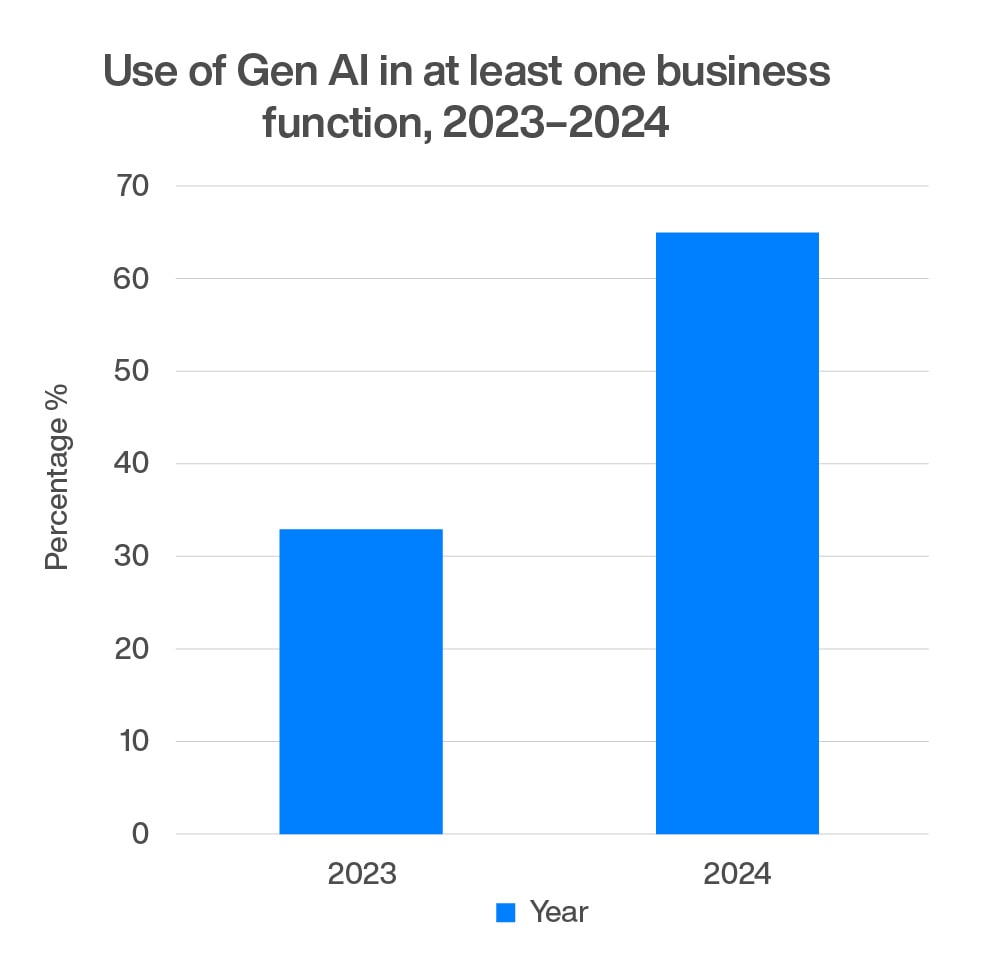
Figure 1: Use of GenAI in at least one business function has nearly doubled from 2023 to 2024, and there are no signs of this trend slowing down. (Source: McKinsey, illustration by Mouser Electronics)
GenAI is also transforming contract management by automating risk analysis, flagging renewal dates, and even suggesting negotiation strategies.[5] However, with innovation moving so quickly, there is the risk of churn between AI versions—whether upgrading predictive models or integrating the latest GenAI capabilities—which underscores the need for agility and a long-term vision in digital procurement transformation.
Maintaining Relationships: Your Most Underrated Risk Mitigator
Strong supplier and distributor relationships are among the most powerful risk management tools. Treating a supplier or distributor as a partner, rather than an associate, can lead to shared success and long-term loyalty between both parties. Building partnerships with distributors connected to a wide supplier network gives you flexibility when the market tightens. As a specific component becomes scarce or compliance standards become a hurdle, having multiple sourcing options through a trusted distributor can mean the difference between meeting deadlines and missing them due to timely and costly redesigns.
Exclusive partnerships and brand-aligned agreements also offer a strategic edge. Working with an authorized distributor ensures access to genuine parts, but more importantly, it can unlock critical advantages in a constrained market. In this industry, a single missing part can halt an entire production line. Relationship management must be viewed as a means of sourcing and a strategic imperative for excellence. Subscribing to distributors’ newsletters can help you stay ahead of trends and make smarter sourcing decisions.
Conclusion
Procurement professionals face risks across three key areas—shortages, rapid tech advancements, and supplier relationships—but each also presents an opportunity to develop dynamic sourcing strategies. Buyers can stay ahead of disruption by proactively embracing tools like AI, understanding trade dynamics, and investing in strong distributor partnerships. With the right strategies and trusted allies, risk mitigation becomes a competitive edge. Invest in tools that offer real-time traceability, understand FTZ and tariff policies, and strengthen supplier networks before the next disruption hits. With the right partners and a proactive mindset, procurement can move from reactive to resilient.
[1]https://procurementpro.com/5-things-you-absolutely-need-to-know-about-the-modern-day-procurement-professional/
[2]https://procurementmag.com/top10/top-10-risk-management-strategies-in-procurement
[3]https://www.gartner.com/en/newsroom/press-releases/2024-03-12-gartner-predicts-25-percent-of-logistics-key-performance-indicator-reporting-will-be-supported-by-genai-by-2028
[4]https://www.mckinsey.com/capabilities/quantumblack/our-insights/the-state-of-ai
[5]https://procurementpro.com/managing-risk-in-a-shifting-trade-landscape/