Modernising Power Path Design with Nexperia Ideal Diode Devices
Image Source: Mouser Electronics
By Matthew Sauceda, Sr. Principal Application Engineer, Nexperia
Schottky diodes are widely used in commercial, automotive, and industrial electronics due to their fast-switching speed, efficiency, and reliability. They are often found in battery-powered gadgets, consumer electronics, and power supplies, where they provide robust protection.
The appeal of Schottky diodes, compared to traditional diodes, lies in their fast-switching characteristics and lower forward voltage drop, which help reduce power dissipation and heat generation. This reduction is essential for maintaining efficiency and protecting sensitive components. Like traditional diodes, Schottky diodes can prevent damage from miswiring through reverse polarity protection, and their ability to clamp voltage transients makes them a strong choice for robust system design and electrical fault protection.
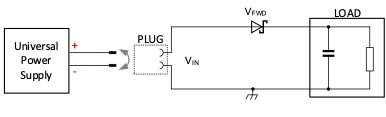
Figure 1: Power management with Schottky diode. (Source: Nexperia)
However, even with their lower forward voltage drop, Schottky diodes still introduce power loss, which can become significant, especially at higher currents. Their physical size and heat dissipation requirements can substantially increase the overall form factor needed to meet thermal constraints.
Modern designs often incorporate PMOS transistors to address these limitations, which significantly reduce power loss due to their very low forward conduction voltage and low RDS(ON). However, their limitations include a lack of reverse current blocking, making them unsuitable for power ORing when multiple power sources are present.
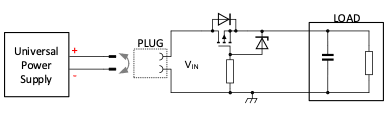
Figure 2: Power management with PMOS FET. (Source: Nexperia)
The Benefits of Integrated Ideal Diodes
Integrated ideal diodes represent the best of both worlds by combining the low power loss and forward voltage drop of PMOS transistors with the robust fault protection features of diodes. Ideal diodes provide reverse current blocking, enabling true power ORing functionality when multiple sources are present. This makes them highly effective in redundant power systems or applications requiring seamless power switching.
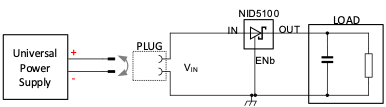
Figure 3: Power management with ideal diode. (Source: Nexperia)
Ideal diodes have a significantly lower forward voltage drop than Schottky diodes, which reduces power dissipation and heat generation, thereby enhancing overall system efficiency. Additionally, their low reverse leakage current helps minimise energy loss during standby or low-power operation, which is vital in battery-powered applications.
Conclusion
Traditional Schottky diodes offer fast switching and low forward voltage drop, but they still cause significant power loss and heat generation, especially at higher currents. Furthermore, PMOS transistors improve efficiency but lack reverse current blocking, which limits their use in systems with multiple power supplies or in priority ORing configurations. With integrated ideal diodes, designers can combine the advantages of Schottky diodes and MOSFETs by offering low forward voltage drop and reverse current blocking. This enables efficient and scalable power architectures in systems with multiple supplies, including applications such as redundancy and priority ORing.
Nexperia’s NID5100 and NID1100 integrated ideal diodes offer very low forward voltage drop, reverse current blocking, low leakage, and smart features across a wide range of applications, including Internet of Things (IoT) systems, CO detectors, gas meters, and battery backup systems.
Author Bio
 Matthew Sauceda joined Nexperia in July 2022 as a Senior Principal Application Engineer, supporting logic, analog, and power-management devices. With over 15 years of semiconductor industry experience, he has held roles in hardware, test, validation, systems and application engineering. Matthew earned his Master's Degree from Texas A&M University in 2009.