Voice Assistants Are Getting Local—And That Changes Things
New Tech Tuesdays
Join Mouser's Technical Content team for a weekly look at all things interesting, new, and noteworthy for design engineers.
Published December 30, 2025
When the first generation of voice assistants like Siri, Alexa, and Google Assistant appeared, they relied almost entirely on the cloud. If you asked a smart speaker to turn off the lights, the device had to record your voice, send it to a server for processing, and then wait for a response before carrying out the command.
It worked, but it was not always fast, private, or reliable.
That model is changing, thanks to embedded processors that can run artificial intelligence (AI) locally. This week’s New Tech Tuesdays explores how today’s voice assistants can now recognize and act on voice commands without ever sending data to the cloud, as well as how this transition makes voice control faster, more secure, and practical in places where internet access is limited or privacy is critical.
Unlocking the Potential of Voice Assistants
Voice assistants that run on embedded AI do more than just listen. They compute. A local chip, usually a high-performance microcontroller (MCU), processes the speech signal in real time using pre-trained models for wake word detection, command recognition, and natural language understanding.
The user speaks, and instead of bouncing that audio off a remote server, the device interprets and performs the command locally. That means that response times are faster, users have better control over their data, and there's no dependence on external connectivity.
The Tech Inside
Edge voice assistants include MCUs that can handle real-time inference and audio processing on the device. These chips require sufficient speed to accurately detect wake words and commands without lag. They also need enough memory to store voice models and manage features like noise suppression or multi-mic input. In addition, they require flexible audio interfaces for analog and digital microphones, along with built-in security functions like Arm® TrustZone®, secure boot, and hardware encryption to keep data protected. Low power consumption is important, too, since many devices must remain in an always-listening mode while running on battery power. Unlike general-purpose controllers, these MCUs are built with voice workloads in mind.
The Future Is Now
The next surge of devices will feature more than just basic commands like “turn on the lights.” Smart thermostats are beginning to adjust to household routines and make adjustments in real time, without relying on the cloud.[1] Wearable medical monitors are detecting distress and responding locally, even when offline.[2] Public systems are moving in the same direction. Retail kiosks, hotel room systems, and public infrastructure such as parking meters[3] are already starting to integrate embedded voice capabilities for fast, hands-free interaction in noisy or crowded environments.
Industry forecasts predict that devices with embedded voice interfaces will grow massively, with adoption increasing across consumer, healthcare, automotive, and industrial markets.[4]
Embedded voice interfaces are currently gaining traction in vehicle systems (Figure 1). Shipments of embedded voice assistants in vehicles are projected to reach 116 million units by 2033, driven by car manufacturers’ goals to create more immersive in-car experiences, like app stores and voice-driven commerce, even without requiring internet connectivity.[5]

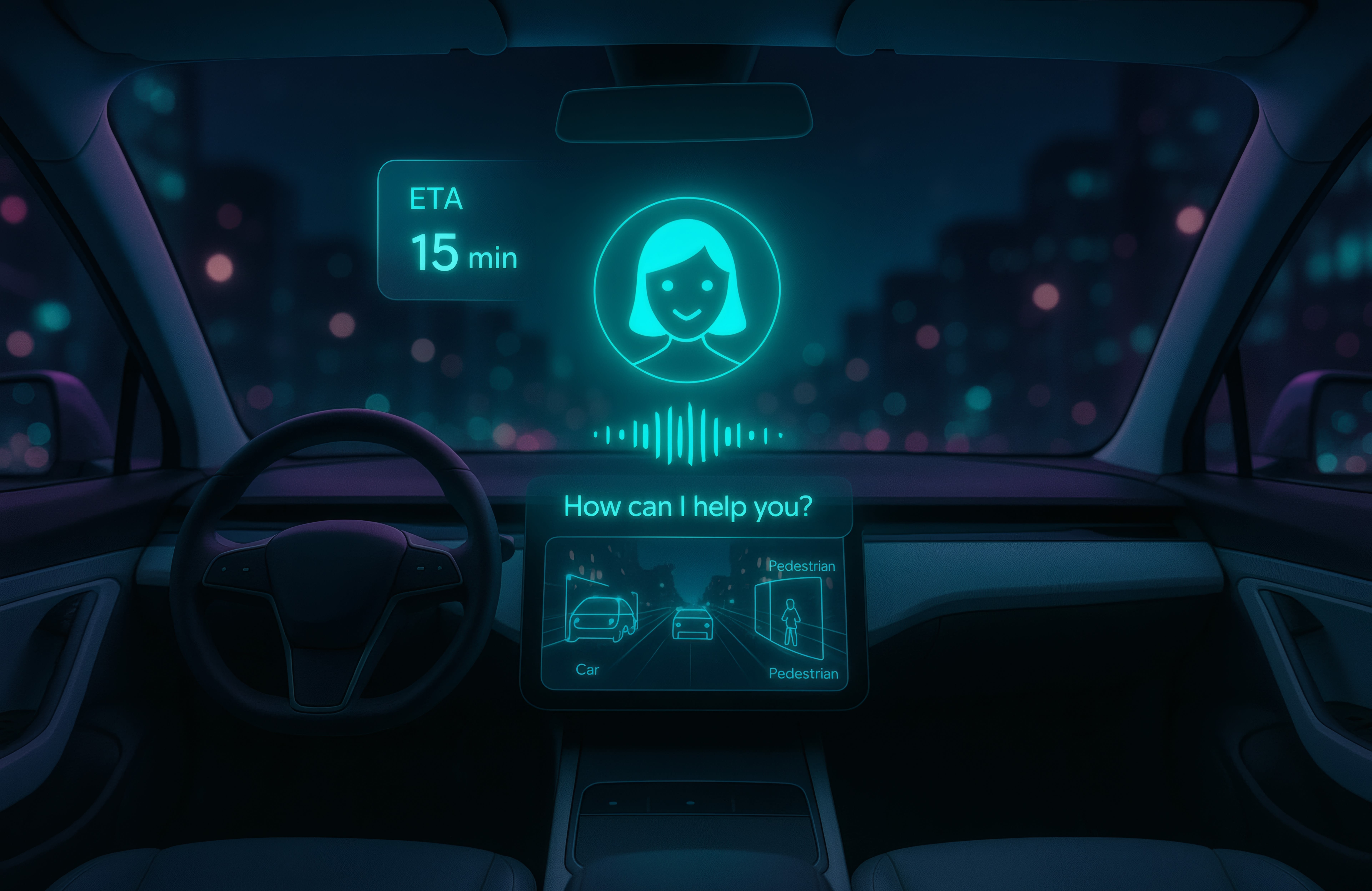
Figure 1: Today's vehicles already feature embedded voice control for navigation and climate, but future systems are expected to include more advanced, always-available assistants that can manage apps, shopping, and complicated tasks right on the dashboard. (Source: Suraaj/stock.adobe.com; generated with AI)
What’s driving this surge is not the improved internet connectivity, but the availability of advanced microcontrollers with the processing power, memory, and security to handle speech directly on-device. As these chips continue to improve, local voice assistants will appear in more places where relying on only the cloud is impractical or not feasible—from factory floors to remote medical applications.
The Newest Products for Your Newest Designs®
The Renesas RA8M1 Voice Kit was developed to help engineers create voice-controlled devices that process commands locally, eliminating the need for cloud reliance.
The kit is built around the RA8M1 MCU, the first to feature the Arm Cortex®-M85 core, offering 480MHz performance along with 2MB of flash and 1MB of SRAM to support real-time voice workloads. With support for both analog and digital microphones, the kit enables developers to explore multi-mic setups, beamforming, and noise suppression. It includes Cyberon’s embedded voice recognition engine for offline wake word and command recognition, including support for multiple languages. With connectivity options like USB, Ethernet, and CAN-FD, plus built-in security features such as TrustZone and secure boot, the RA8M1 Voice Kit offers a ready-to-use platform for prototyping responsive, private, and reliable voice interfaces.
Tuesday’s Takeaway
Voice assistants are not just standalone devices that require the cloud. They are becoming embedded features built right into devices.
Processing voice data on the device cuts down on the delays and keeps sensitive information safe on the system. It also means that the technology can work in places where people can’t rely on the internet. As MCUs gain even more processing power and memory, voice control will keep finding its way into more than just smart speakers, opening up new possibilities in medical devices, cars, industrial systems, and public systems.
Sources
[1]https://nightingaleelectrical.uk/resources/integrating-smart-home-devices-with-voice-assistants
[2]https://news.northwestern.edu/stories/2023/02/first-wearable-device-for-vocal-fatigue-senses-when-your-voice-needs-a-break
[3]https://idtechproducts.com/kiosk-v-for-parking
[4]https://www.grandviewresearch.com/industry-analysis/voice-user-interface-market-report
[5]https://www.prnewswire.com/news-releases/improving-voice-technology-and-expanding-automotive-use-cases-drive-116-million-vehicle-embedded-voice-assistant-shipments-by-2033-302080906.html