Future Trends in Control Panels
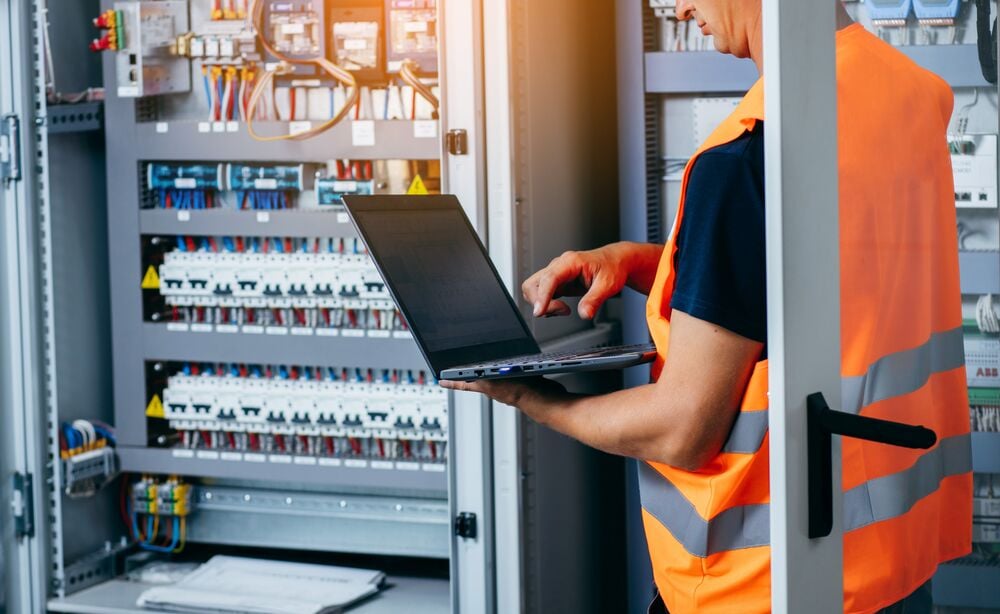
(Source: andrew_shots/stock.adobe.com)
As Industry 4.0 gives way to 5.0—and even early ideas of 6.0—control panels are becoming more intelligent, more connected, and far more adaptable.
Industry 4.0 introduced digitalization and connectivity to manufacturing. It brought us smart factories where machines talk to each other, collect real-time data, and make automated decisions.
Industry 5.0 builds on that by putting people back in the center—combining human creativity with advanced robotics and artificial intelligence (AI) to create more personalized, sustainable production.
Industry 6.0, though still conceptual, looks even further ahead. It imagines a future of hyper-personalized manufacturing where machines not only collaborate with humans but evolve in real time—driven by AI, seamless human-machine integration, and the potential of quantum computing.
Each phase builds on the last: 4.0 connected the machines, 5.0 reconnected the humans, and 6.0 aims to fully merge the two.
In this blog, we walk you through the technologies and design strategies already reshaping control panels—and we look at what is just around the corner.
How Industry 4.0 and 5.0 Are Transforming Control Panels
The core function of the control panel has not changed; it is still a container for the plant’s brain. But what is built into these panels is evolving rapidly. Technologies like the industrial Internet of Things (IIoT), edge computing, 5G, and cloud connectivity are enabling panels that are much smarter and more connected than ever.
Sensors have become smarter while delivering more power and versatility. For example, we now have multivariable smart sensors that can simultaneously read pressure, vibration, and temperature in a single unit. This creates an explosion of data flowing in and out of the panels.
More data also means more gateways, more antennas, and more network infrastructure packed into the same limited panel space. While wireless technology is gaining popularity—especially for non-critical monitoring—most users still prefer wired systems for mission-critical control due to data reliability and cybersecurity risks.
In short, control panels are becoming the nerve centers of intelligent, data-rich ecosystems.
Why Modularity and Scalability Are So Critical
As the nerve centers of these rapidly evolving industrial ecosystems, modularity and scalability are critical design features in control panels. Modularity means more than just putting things into blocks. It means flexibility. We need panels that allow builders to move shelves around, swap out modules, or expand the footprint without having to start from scratch. Power supplies, I/O cards, or controllers need to be accessible and, ideally, hot-swappable.
Scalability is about anticipating growth. Vendors must consider how to design a panel that meets today’s needs while accommodating tomorrow’s technologies. Whether that’s more processing power, expanded connectivity, or new cooling systems, the layout must support it.
Meeting these design needs requires innovative partnerships between the vendors and the panel builders. The builders design the enclosure, but the vendors must integrate everything—cabling, cooling, and power—without overloading the space.
Cybersecurity’s Role in Control Panel Design
Cybersecurity is one of the fastest-changing and most vital areas in industrial control. Attacks on infrastructure can originate from thousands of miles away. While physical access security is important, most of the cybersecurity burden falls on the electronics and software inside the panel.
That means embedded firewalls, secure communication protocols, and rigorous software design. But the panel builder also has a role to play. More panels now include electronic locks, biometric readers, or key fobs that control access to them. Access logs are becoming increasingly common, allowing companies to track who interacts with the panel and when.
We can expect to see increased pressure on panel builders to meet stricter cybersecurity standards. Today, you might get by with basic locking mechanisms. Tomorrow, compliance with standards like UL 2900 and IEC 62443 will be essential.
AI and Machine Learning Are Shaping Future Control Systems
AI will turn control panels from passive equipment into proactive, intelligent systems. In the future, control panels might have the capability to monitor for temperature, detect early signs of failure, and send a maintenance request before a technician even realizes something is wrong.
We’re also moving toward an environment where panels provide recommendations. For example, they might say, “This I/O module has not been used in six months. Is it still required?” Or, “This cooling pattern is inefficient—here’s how to reduce energy use.”
In the future, as machine learning analyzes and develops an understanding of machine operations and control systems, it will help us evolve from predictive maintenance to self-optimizing systems. Eventually, we will see panels that interact across the plant, understand broader environmental conditions, and act accordingly. It is a bit like giving each panel a nervous system and a brain of its own.
Sustainability Is No Longer an Afterthought
Sustainability is already reshaping panel design. That means considering the materials we use, how panels are painted or coated, and how easily they can be disassembled and recycled when they are retired.
AI could help design recyclable panels the same way it helps develop new drugs or materials. With Industry 4.0, 5.0, and the emerging 6.0 advancing rapidly, panels will likely be replaced or modified more frequently during upgrades. So, panel builders must make sure they can be responsibly dismantled and reused.
Energy efficiency is another key aspect of sustainable panel design. Active cooling systems add cost and draw power. That is why hybrid designs are gaining ground—using passive ventilation first, and switching to active cooling only when needed.
Digital Twins’ Growing Impact on Control Panel Design
Digital twins let us simulate and test a panel design before it is built. We can visualize airflow, heat zones, wiring constraints, and even maintenance accessibility. This is a huge opportunity to reduce design cycles and prevent real-world deployment issues.
We can also use digital twins to evaluate trade-offs: Should I use this layout or that one? Does this module placement make the panel run hotter? Does it make maintenance harder? The answers to questions like these help us refine the design virtually, saving time and cost.
In the future, digital twins may be paired with AI to create AI-native workflows, with software tools like Siemens NX or Autodesk’s generative design platforms creating new opportunities. Instead of applying AI after a design is finished, we will build processes from scratch that assume AI will guide every step.
Conclusion
We’re entering an era where control panels are no longer passive pieces of equipment—they are active players in the broader industrial ecosystem of the plant. They gather and act on data, support AI-driven decision-making, and serve as gateways between the physical and digital worlds.
These control panel advancements match the rapid pace of change underway in industrial automation, and it means everything needs to move faster: design, compliance, deployment, training. Panel builders must keep pace not only with technological advancements but also with changes in the workforce. Training skilled operators is becoming increasingly challenging as more people transition into higher-paying tech jobs.
Success will require a new mindset. It’s not enough to optimize old workflows with new tech. We need to reimagine panel design from the ground up, building for speed, intelligence, and sustainability. The panel of the future is already taking shape. Now is the time to design like it.