A Faster Path to Automotive Embedded Bring-Up
New Tech Tuesdays
Join Mouser's Technical Content team for a weekly look at all things interesting, new, and noteworthy for design engineers.
Published July 28, 2026
Anyone who has spent time at a workbench knows the ritual: a power supply on one side, a debug cable on the other, and a half-finished software stack waiting for hardware that is still somewhere between layout and procurement. In automotive work, that delay can be expensive because software, interfaces, and system behavior rarely pause just because a custom printed circuit board (PCB) is not ready.
That is why early automotive embedded development often begins on evaluation hardware before the first custom PCB is available. Engineers need a practical way to assess device behavior, validate interfaces, test software assumptions, and identify pain points before those discoveries turn into additional board spins. As vehicle architecture becomes more connected and software-centric, the need for a stable development node early in the process becomes even more important.
This week’s New Tech Tuesdays examines why early-stage validation is critical in modern automotive design, how evolving network and software demands are reshaping development workflows, and where evaluation boards fit into a more efficient bring-up strategy.
Embedded Development Starts Before the Custom PCB
Early validation is not just convenient; it is one of the more practical ways to reduce development risk. Evaluation platforms are intended to help engineers assess device behavior, test software, measure characteristic curves, and verify datasheet expectations during design-in. They are not meant to serve as final customer hardware, production designs, or reliability-qualified systems.
That distinction matters. At this stage, engineers are trying to answer the practical questions that will shape future electronic control unit (ECU) design: whether the software initializes cleanly, whether the intended interfaces align with the subsystem architecture, and where problems are likely to appear first.
Bench-level experimentation provides development teams with a controlled environment to learn the device, explore the toolchain, and validate assumptions before custom hardware arrives. That kind of early access can shorten bring-up time, improve debugging efficiency, and reduce downstream integration risk.
Why Automotive Development Keeps Getting Harder
Modern vehicles ask embedded platforms to do far more than monitor a few sensors and actuate a few outputs. Automotive microcontrollers (MCUs) now support workloads tied to eMobility, advanced driver assistance systems (ADAS), evolving electrical/electronic (E/E) architectures, and increasingly software-defined behavior. In practice, that means developers must account for more processing complexity, more communication paths, and more structured software workflows earlier in the design cycle.
Software expectations have expanded right alongside the hardware. Development increasingly depends on earlier bring-up, predictable debug behavior, and practical access to the software ecosystem around a microcontroller family. Teams working within AUTomotive Open System ARchitecture (AUTOSAR)-related workflows or software migration paths across ECU variants benefit from hardware that provides a stable reference point for validating application behavior and integration assumptions.
The Newest Products for Your Newest Designs®
Infineon Technologies’ KIT_A3G_TC4D7_LITE AURIX™ A3G Lite Kit is a compact evaluation board built around a 32-bit, single-chip AURIX TriCore™ TC4D7 microcontroller for rapid prototyping, software development, and system evaluation in automotive and industrial embedded systems (Figure 1). The board provides onboard CAN and Ethernet access, plus expansion headers for additional interface prototyping and external transceiver evaluation, giving developers practical exposure to the communication mix now appearing across modern automotive architectures.
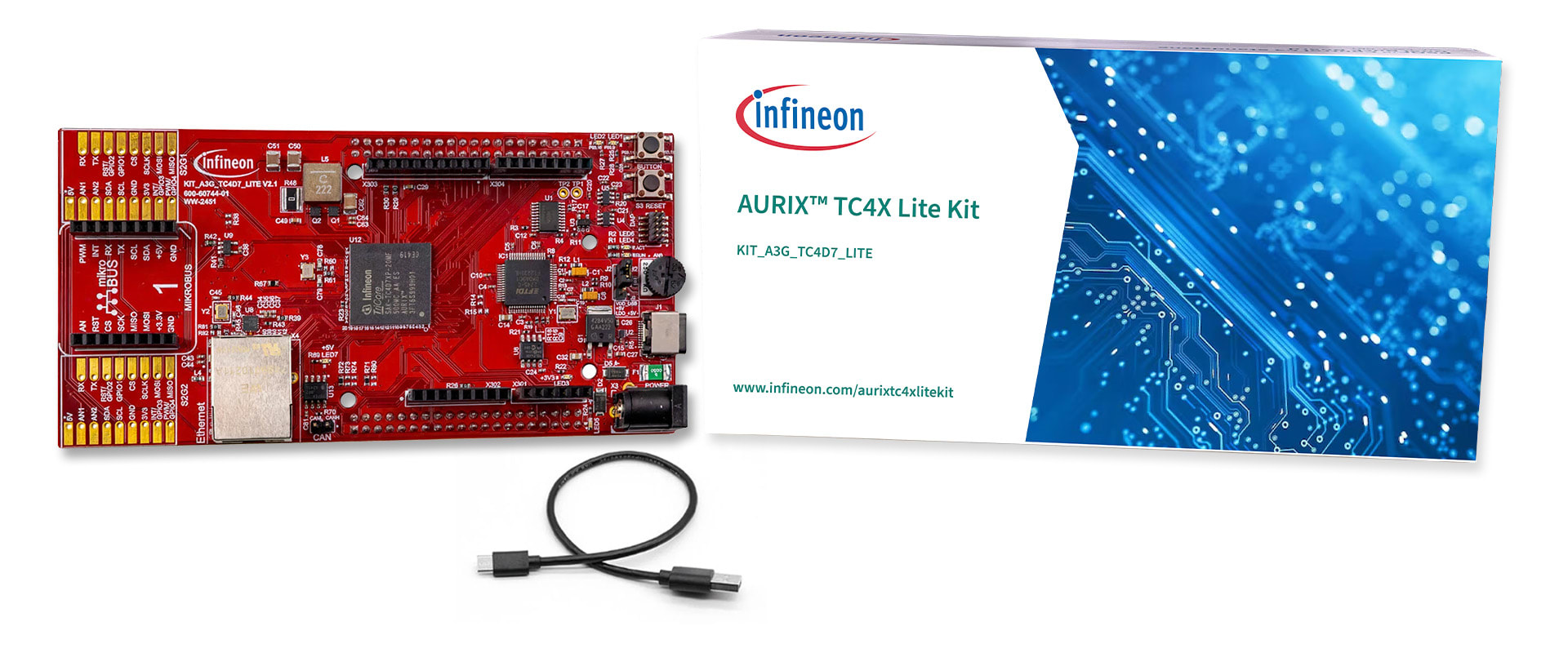
Figure 1: The Infineon KIT_A3G_TC4D7_LITE board features the 32-bit AURIX TriCore TC4D7 microcontroller for advanced multi-tasking and real-time processing. (Source: Infineon Technologies)
For bench work, the kit includes onboard miniWiggler V3 debug support, USB connectivity, a user push-button, LEDs, reset control, and a variable analog input potentiometer for basic signal simulation. Infineon lists compatibility with AURIX Development Studio, and the associated product material notes support for the FreeEntry Toolchain, providing a practical starting point for code development, debugging, and evaluation.
Tuesday’s Takeaway
Automotive embedded development moves faster when engineers can validate interfaces, software, and subsystem assumptions before a custom PCB enters the picture. As automotive platforms absorb more communication pathways, tighter timing expectations, and more structured software workflows, evaluation hardware becomes an increasingly important tool for reducing early development risk.