Ecosystems Enhance Open Source Hardware
Electronics suppliers have changed their ways to meet demand for open source technology and boosted innovation as a result
By Steven Keeping, for Mouser Electronics
The development of Linux, conceived by Finnish engineer Linus Torvalds in 1991, is an incredible story. Through a series of fortuitous happenstances, the introduction of the Unix-based operating system (OS) set in train today’s burgeoning open source software (OSS) community.
Via the accessibility afforded by the Internet, twenty-five years of OSS development has established a model for evolving and sharing that encourages innovation. It’s a model which, from a slow start several decades ago, is now being vigorously applied to hardware – lowering the barrier-to-entry to, and encouraging mass participation in, electronics design.
The result is a complete change in the way commercial development kits are executed. The prime example of this change is the way in which a de facto standard is forming around the Arduino UNO Rev 3 ecosystem, as Intel, STMicroelectronics, Cypress, Adafruit and others create development kits with Arduino compatibility. Open source hardware (OSHW) ecosystems comprise ready-made collections of software, hardware and forum support groups, and together with open source creativity, are changing long-established design practices. How did this all begin?
The Origins of Open Source
When the new owners of AT&T Bell Labs put a stop to Unix’s use as a free educational tool, American Andrew S. Tannebaum, a Professor of Computer Science at a Dutch university, was spurred into action. He developed a “clone” of Unix, called MINIX, to teach his students about coding. Linus Torvalds, then a student at the University of Helsinki, built on Tannebaum’s work and developed his own OS kernel which eventually became Linux, an OS that was free from the “education-only” licensing that held back MINIX.
In parallel, the GNU Project, the brainchild of “software freedom activist” and computer programmer Richard Stallman, started up with the aim of creating a “complete Unix-compatible software system” composed entirely of free software. As it became available, Torvalds replaced the MINIX components of Linux with freely-available code from the GNU Project and released the software as a freely-available and fully-functional open source OS, which other developers then constantly upgraded and redistributed.
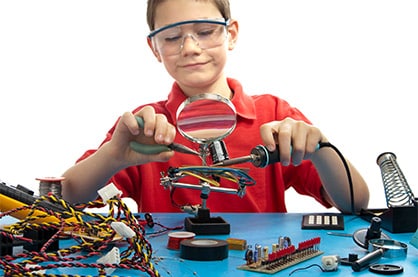
Figure 1: Open source hardware is encouraging school children to learn about computing.
But while the OSS community was gathering unstoppable momentum, hardware remained the domain of commercial companies focused on (often patented) proprietary technology. One reason for this was cost; software is incredibly portable and can be copied at will (and typically at little expense). Hardware requires assembly and shipping. Historically, that’s created barriers-to-entry and made it easy for companies to conceal and protect their hardware designs.
A precipitous decline in the price of electronic components leading to cheap yet powerful computing platforms, and a realization by large companies that––with a well thought-out strategy––there was market share to be gained by seeding and thus positioning their processors at the heart of OSHW overturned the established order.
The technology inside the chips themselves is not revealed, but boards distributed as OSHW should meet some minimum criteria in sharing and be licensed such that those modifying are not subject to patent infringement or copyright laws, but are encouraged to credit their sources and to share, in turn, their modifications for others to build upon.
To clarify the guiding principles of OSHW, the Open Source Hardware Associationi (OSHWA) has produced a Statement of Principlesii which defines OSHW as “hardware whose design is made publicly available so that anyone can study, modify, distribute, make, and sell the design or hardware based on that design”. (OSHW discussed in the remainder of this article is assumed to meet that definition and be subject to the appropriate public license.)
The Maker Movement’s Influence
In addition to the influence of OSS pioneers, a decline in component costs and commercial support, the OSHW sector can thank the Maker Movement for its rude health.
Today’s makers are like the hobbyists of the past in that they enjoy technology and sharing their discoveries. But there the similarity ends; unlike the tinkerers of the 60s and 70s, who had to make do with a breadboard, a handful of components from Radio Shack and a dog-eared circuit diagram from Popular Mechanics, modern makers enjoy virtually the same access to reference designs, well-supported “standard” hardware platforms, software Integrated Development Environments (IDE), and development kits as their professional peers.
According to consultants Deloitte, over 100 Maker Faires were hosted in 2013 and 530,000 amateur engineers met to exhibit their ideas and experience new technologies. In addition to formal gatherings, “maker spaces” have sprung up providing access to electronics assembly and coding tools, equipment such as 3-D printers, mentoring expertise and even advice on commercialization. Makers are keen to help each other. As a result, many online communities have sprung up which provide in-depth advice about how to get the most out of OSHW boards and the processors at the heart of them.
In his spare time, Mike Cooper, a qualified engineer whose day job is a director for a defense contractor, is president at PaxSpaceiii, a thriving Hollywood, Maryland-based maker community. “Hollywood is a rural community so this is not Silicon Valley,” explains Cooper, “but it’s a prosperous area and many PaxSpace members are employed at the Naval Air Station nearby.”
Cooper emphasizes that open source-hardware, -software and –tool chains are the lifeblood of the Maker Movement. “About 75 per cent of our members base the electronics for their projects on open source hardware platforms such as Arduino and LaunchPad, and 25 per cent use the schematics and build their own computers from components,” he says.
What’s in It for the Chip Makers?
While Makers have boundless enthusiasm for open source, they don’t necessarily have bottomless pockets. And a key difference between OSS and OSHW is that one is truly free while the other requires parting with hard cash. Fortunately, factors such as the mass production of smartphones has resulted in continuous reductions in the prices of the microcontrollers (MCUs), Flash memory, wireless chips and connectors that power maker electronic projects. Manufacturers now offer capable computer platforms based on 32-bit processors, with lots of memory, often wireless connectivity, multiple communications ports and dozens of I/O pins for just tens of dollars. The Arduino 101, for example, is a 32-bit MCU-based single board computer (SBC) that can be purchased from Mouser Electronics for about $30. Other open source platforms cost even less, with some priced around $10, like the STM32 Nucleo. Lower prices equate to greater accessibility, especially in the education sector.
It’s doubtful that board vendors are relying on OSHW to boost profits – so why do they bother? The answer is twofold: today’s maker could easily be tomorrow’s entrepreneur and, just as OSS originally attracted the academics, its physical equivalent (and associated design tools) are perfect to teach about hardware. Science, Technology, Engineering and Math (STEM) educational initiatives are designed to raise the computing skills of students. By proffering inexpensive open source technology and tool chains, chip makers can get their products into the hands of the next generation of design engineers––who are more likely to prefer them later––while simultaneously underscoring their good corporate citizen credentials. That’s well worth a sacrifice against the bottom line.
Open Source Hardware Platforms
The range of open source is growing. Arduino (called Genuino outside the U.S.) is arguably the poster child of the OSHW sector. The organization traces it roots back to a SBC designed in 2005 aimed at teaching students. Now the name is synonymous with the hardware, software, and a large community.
Arduino provides an inexpensive foundation for projects that can sense and interact with the physical world; for example, basic robots and sensors. Programming packages make it easier for individuals with no programming experience. One clever element of Arduino hardware is the incorporation of simply-connected expansion boards (or “shields”), swiftly adding functionality such as wireless connectivity and motor control in a simple, modular fashion.
Historically, Arduino hardware was based on 8-bit (then 16- and 32-bit) Atmel MCUs, an open source programming language and IDE (with C and C++ support). Schematics are openly available and there are assembled Arduino SBCs or do-it-yourself construction kits from various companies. Over 700,000 Arduino computers are now in use.
In the decade since its launch, Arduino has forged a sustainable ecosystem to support users. Ecosystems might include SBCs (including variations on the original), expansion boards, software libraries, an IDE (which encourages the use of license-free design tools), and perhaps most significant of all, a worldwide development community dedicated to sharing designs information, software and troubleshooting tips. Many boards have hitched on to the Arduino UNO Rev 3 ecosystem, providing (at the minimum) headers that are compatible with UNO shields. Besides the STM Nucleo, the Arduino-Intel collaboration known as Arduino 101 and several Adafruit creations are fully Arduino UNO-compatible.
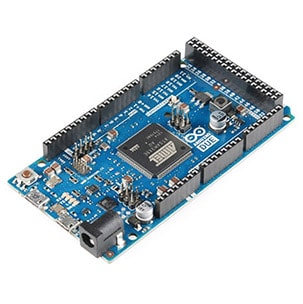
Figure 2: The Arduino Due is the first Arduino single board computer to feature a 32-bit MCU. (Source: arduino.cc)
Despite forging a de facto standard for OSHW ecosystems, Arduino doesn’t have the segment wrapped up; other open source communities exist, albeit replicating the ecosystem of the original Arduino model. For example, BeagleBoard.org is a successful U.S.-based non-profit corporation which promotes the design and use of OSHW in embedded computing design. The organization came about as a result of the efforts of a group of individuals, including several employees of Texas Instruments (TI), interested in creating open source embedded devices. The first OSHW computer from the organization, based on TI’s OMAP3530 processor, was launched in July 2008 and designed as an educational tool to teach software and hardware engineering.
A family of boards followed, sold to the public under Creative Commons licensesiv, featuring low-cost, fan-less single board designs based on low-power Texas Instruments processors with the expandability of today's desktop computers, but without the bulk, expense, or noise. The BeagleBone Black, for example, was launched in 2013 and features a 1-GHz Sitara ARM Cortex-A8 32-bit microprocessor from TI backed up with high-capacity fast memory and HDMI, UART, USB and Ethernet connectors. The Beaglebone equivalent to Arduino shields are “capes.”
Intel has become a notable supporter of OSHW in the last several years. Apart from offering the Arduino 101 OSHW single board computer, which uses the low-power Intel® Curie module™ that incorporates a 32-bit MCU, Bluetooth® Smart wireless chip, and 6-axis sensor including accelerometers and gyroscopes, the company (the world’s largest chip maker with revenues of $49.9 billion in 2014) also offers other OSHW platforms that can be used to prototype technology-based products. Example include the Galileo, an Arduino-certified development board based on a 32-bit Intel Pentium-class system-on-chip specifically designed for makers, students, educators, and DIY electronics enthusiasts. Like the Arduino 101, Galileo is hardware-, software- and pin-compatible with a wide range of Arduino Uno R3 shields.
Intel has even gone so far as sponsoring the Maker Movement’s very own reality TV show, America’s Greatest Makersv, where teams of amateur engineers attempt to invent game-changing technology for a $1 million prize.
The company is not alone in its support for OSHW; STMicroelectronics, for example, offers the STM32 MCU-based Nucleo, TI offers the MSP430 MCU-based LaunchPad, and Cypress Semiconductor’s Pioneer Kits offer Arduino compatibility as well as schematics and source files in the kit set-up files.
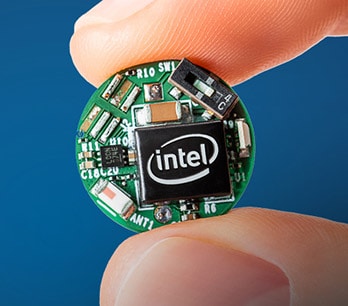
Figure 3: Intel’s Curie module is a good basis for wearable prototypes, available on the Arduino 101. (Source: Intel)
Not only have these semiconductor vendors played their part by offering powerful yet inexpensive design platforms, they have also assisted in the formation of communities by hosting forums on their websites whereby interested parties can ask questions, share information and even receive expert advice from the company engineers. Examples include TI’s E2E community or Intel’s Galileo support community.
Such largesse is remarkable considering that, historically, semiconductor firms’ business models have been based on secrecy, proprietary technology and patent protection. Community influence is such that the traditional business model is looking increasingly outmoded. The particular OSHW ecosystem pioneered by Arduino, and now adopted by other groups, has demonstrated a new way forward. It’s a model in which corporates can engage potential long-term customers—including many who don’t have formal technical training—extending the sales of their mid-life MCUs while still protecting the intellectual property of their leading-edge silicon. That’s commercially compelling enough for the major vendors to embrace OSHW with verve-boosting innovation when the world looked to be running out of inventive steam.
Resources
i http://oshwa.org
ii http://www.oshwa.org/definition/
iii https://paxspace.org
iv https://creativecommons.org/licenses/by-sa/4.0/
v https://www.americasgreatestmakers.com/
 Steven Keeping is a Sydney-based freelance electronics journalist and a contributing writer for Mouser Electronics. He gained a BEng (Hons.) degree at Brighton University, U.K., before working as an electronics engineer for seven years. He then spent 13 years in senior editorial and publishing roles on electronics design titles in the U.K. and Australia before turning to freelance journalism in 2006.